Industrial Branch|Intersection Table
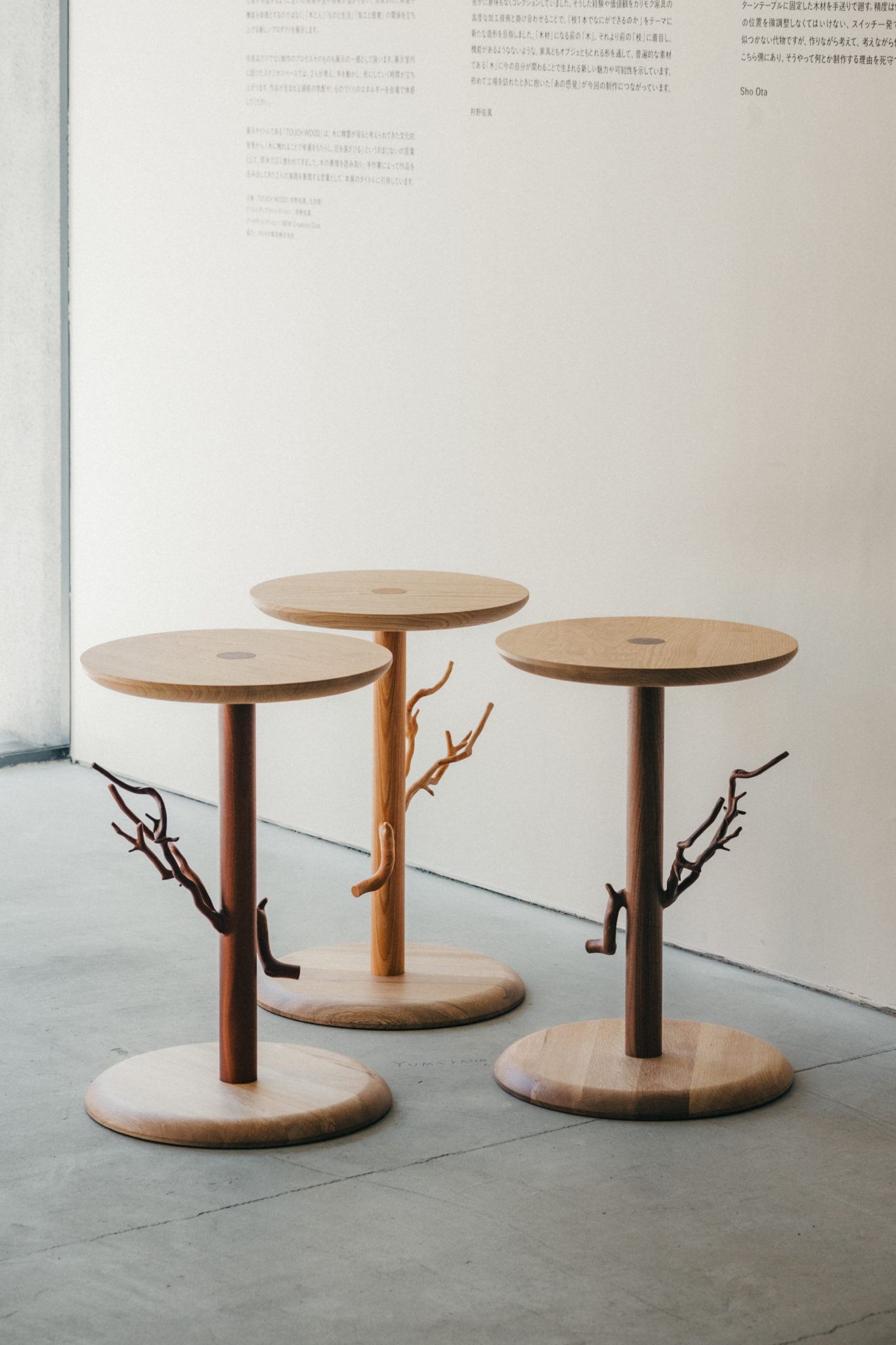 Photo : Saiko Kodaka
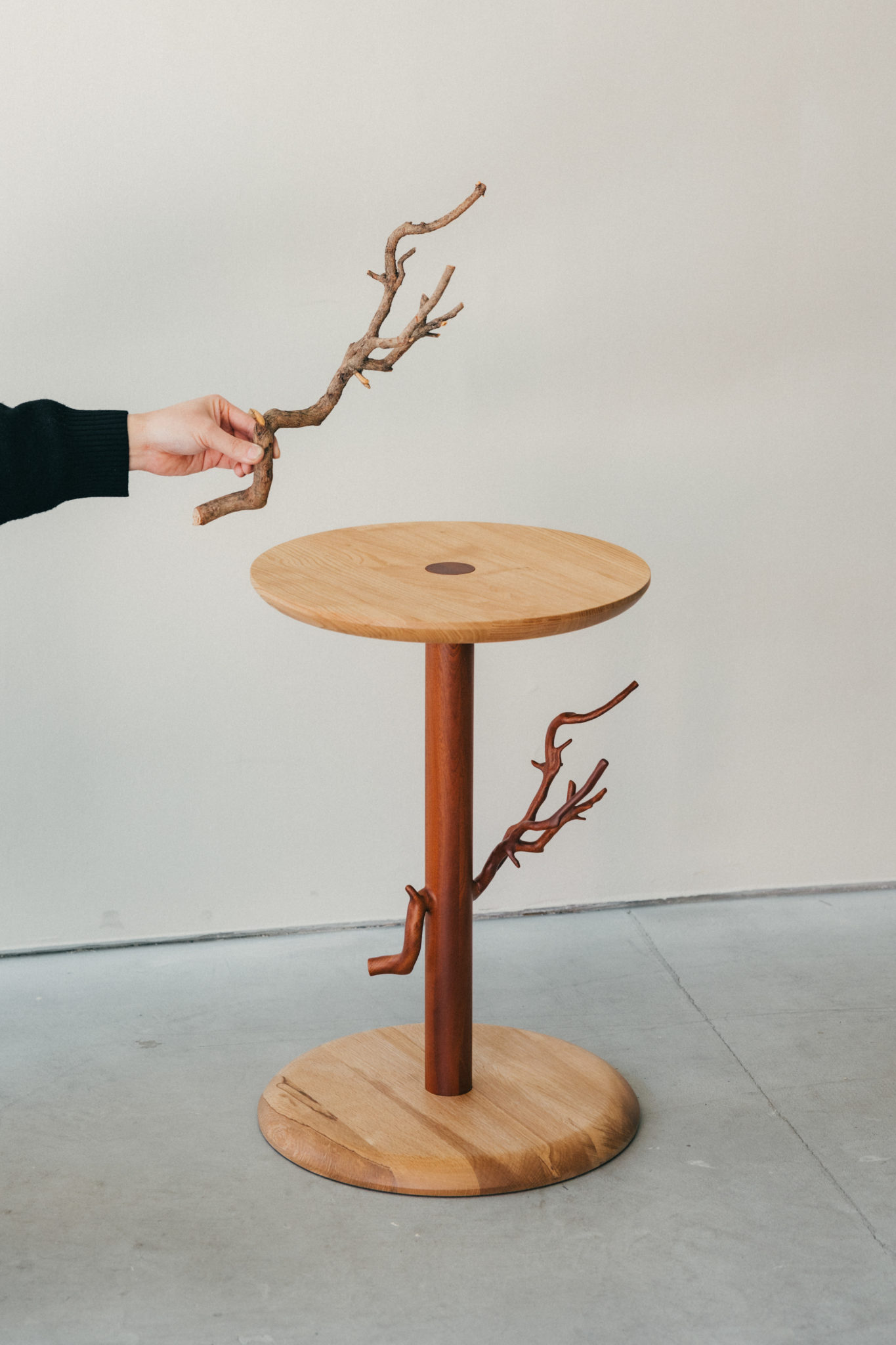 Photo : Saiko Kodaka
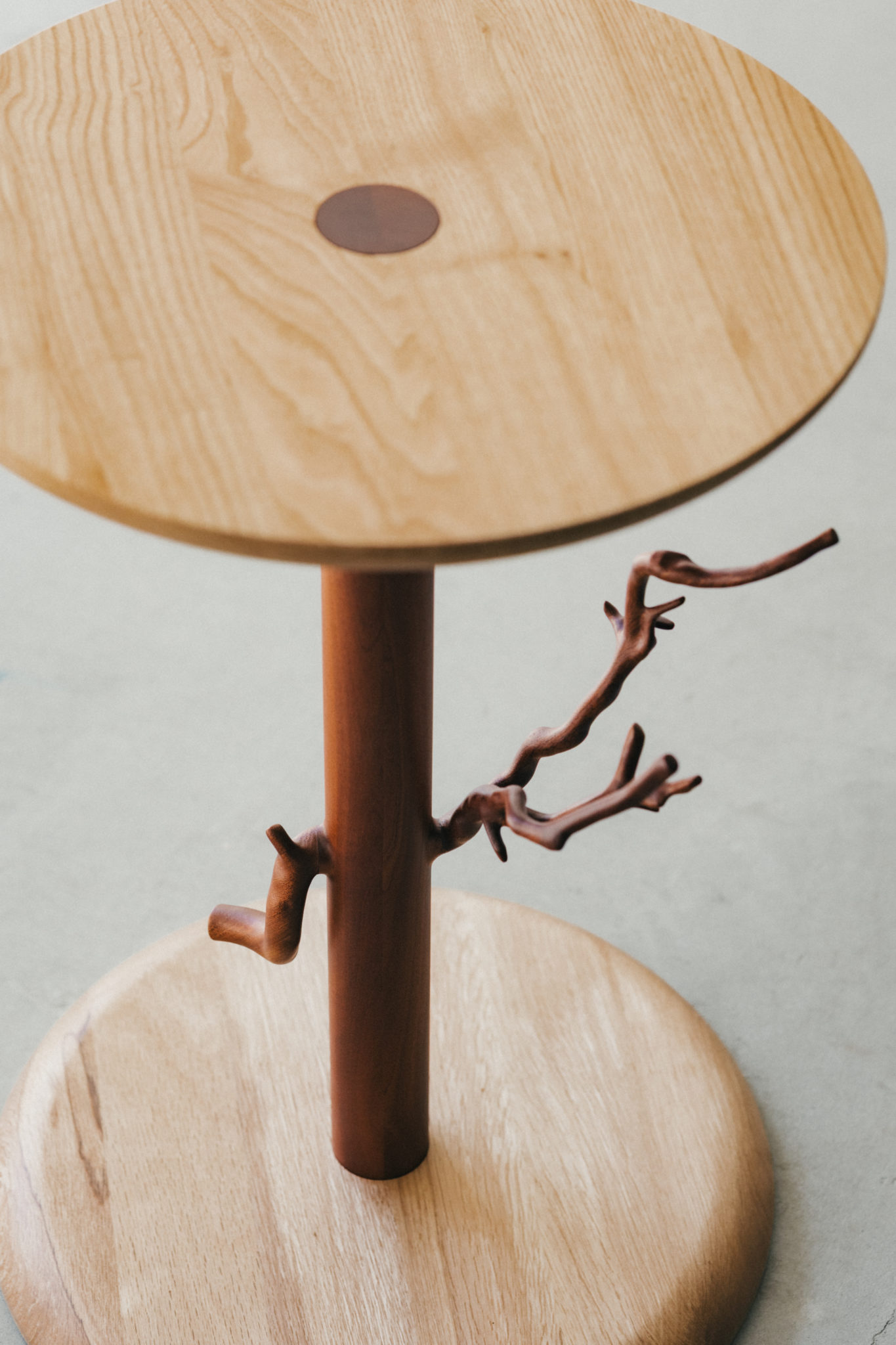 Photo : Saiko Kodaka
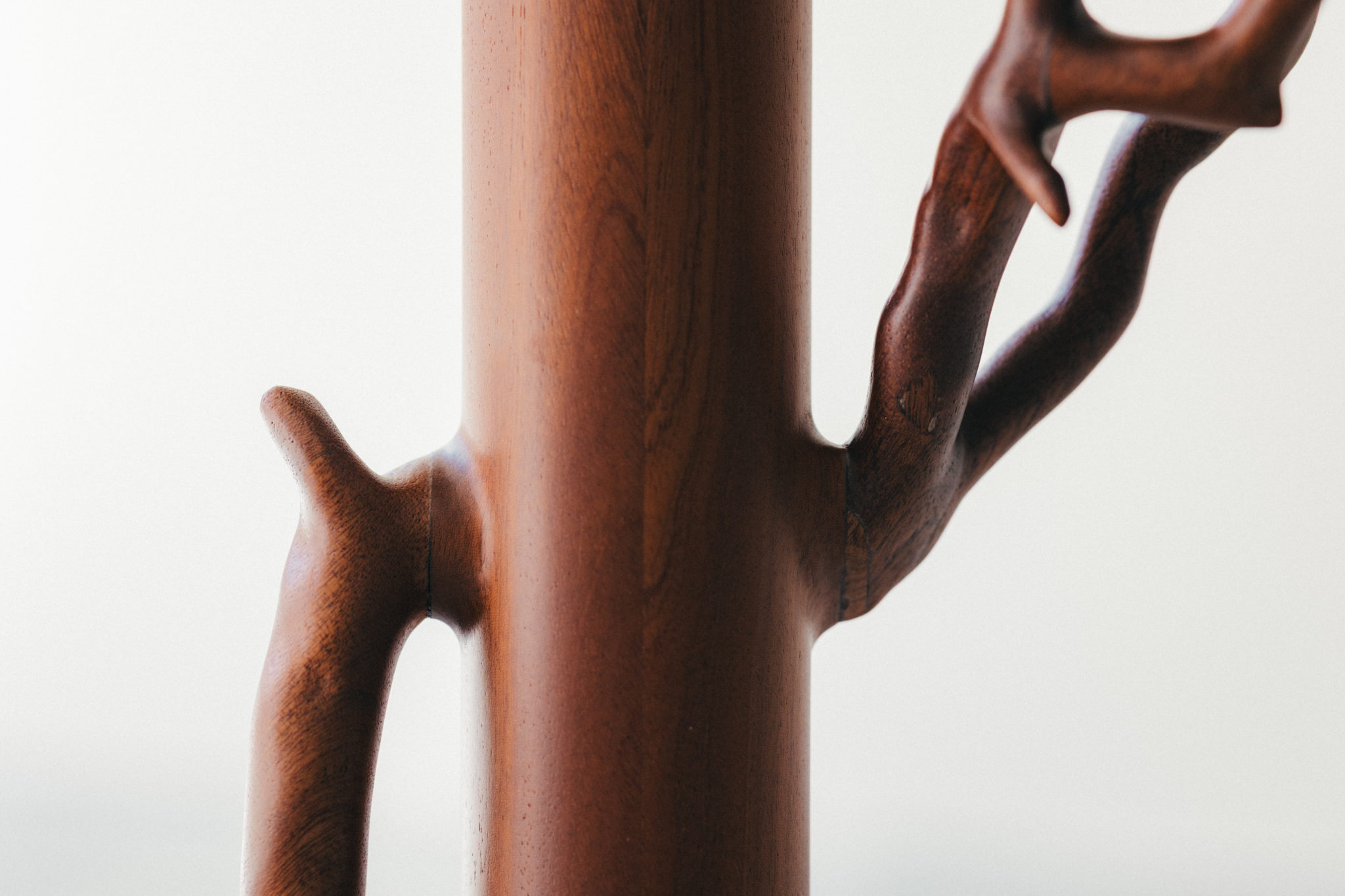 Photo : Saiko Kodaka
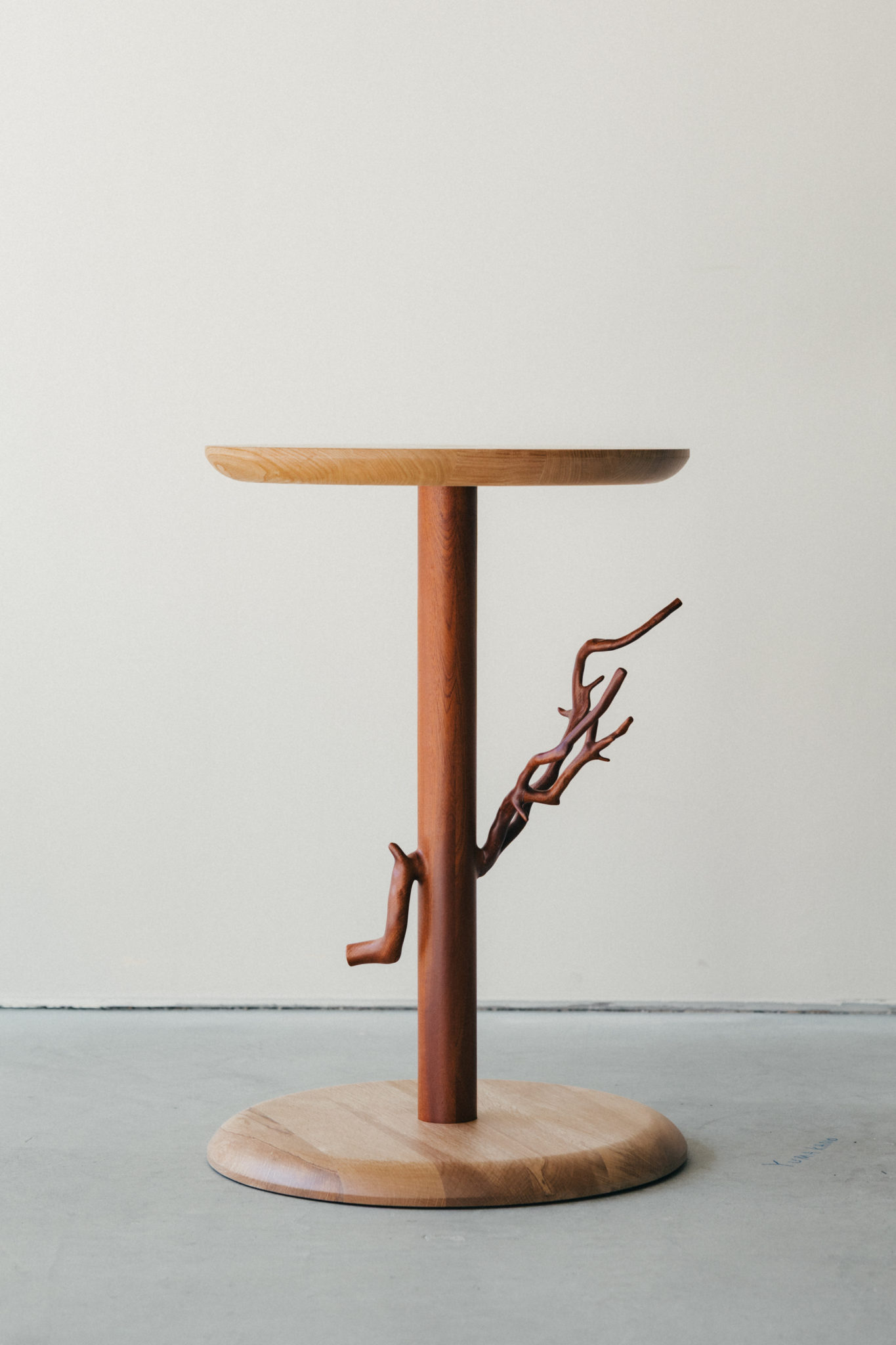 Photo : Saiko Kodaka
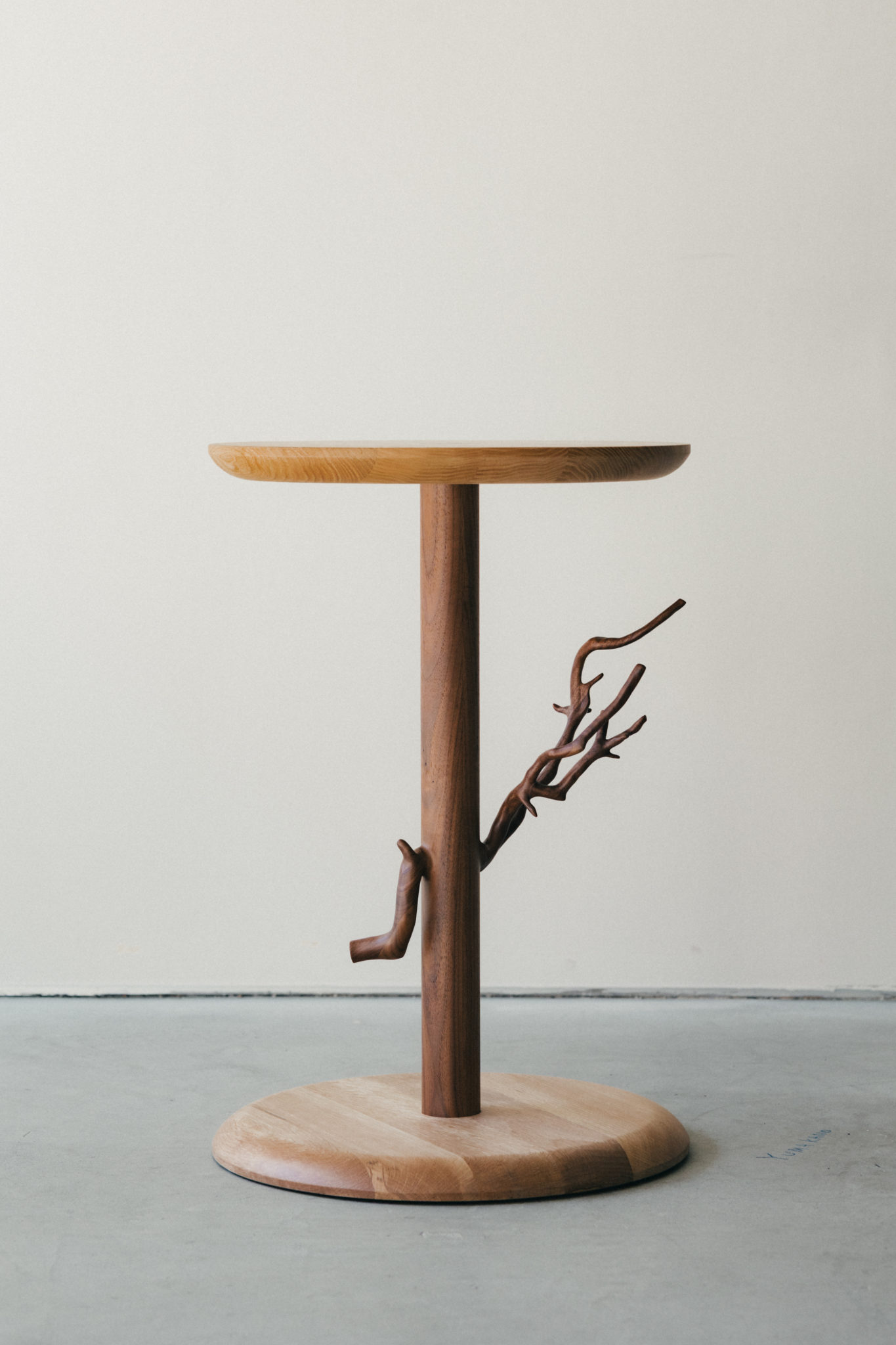 Photo : Saiko Kodaka
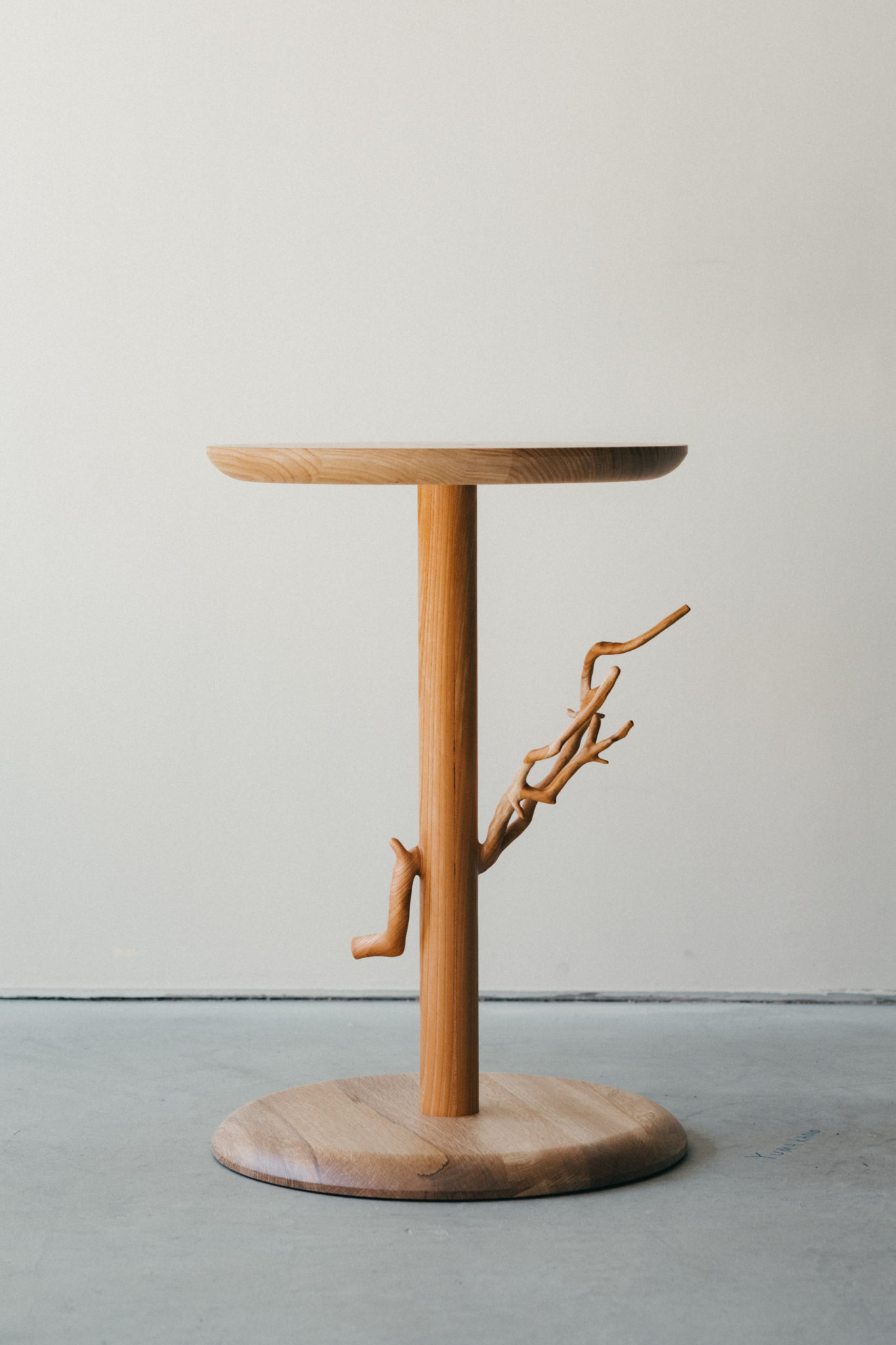 Photo : Saiko Kodaka
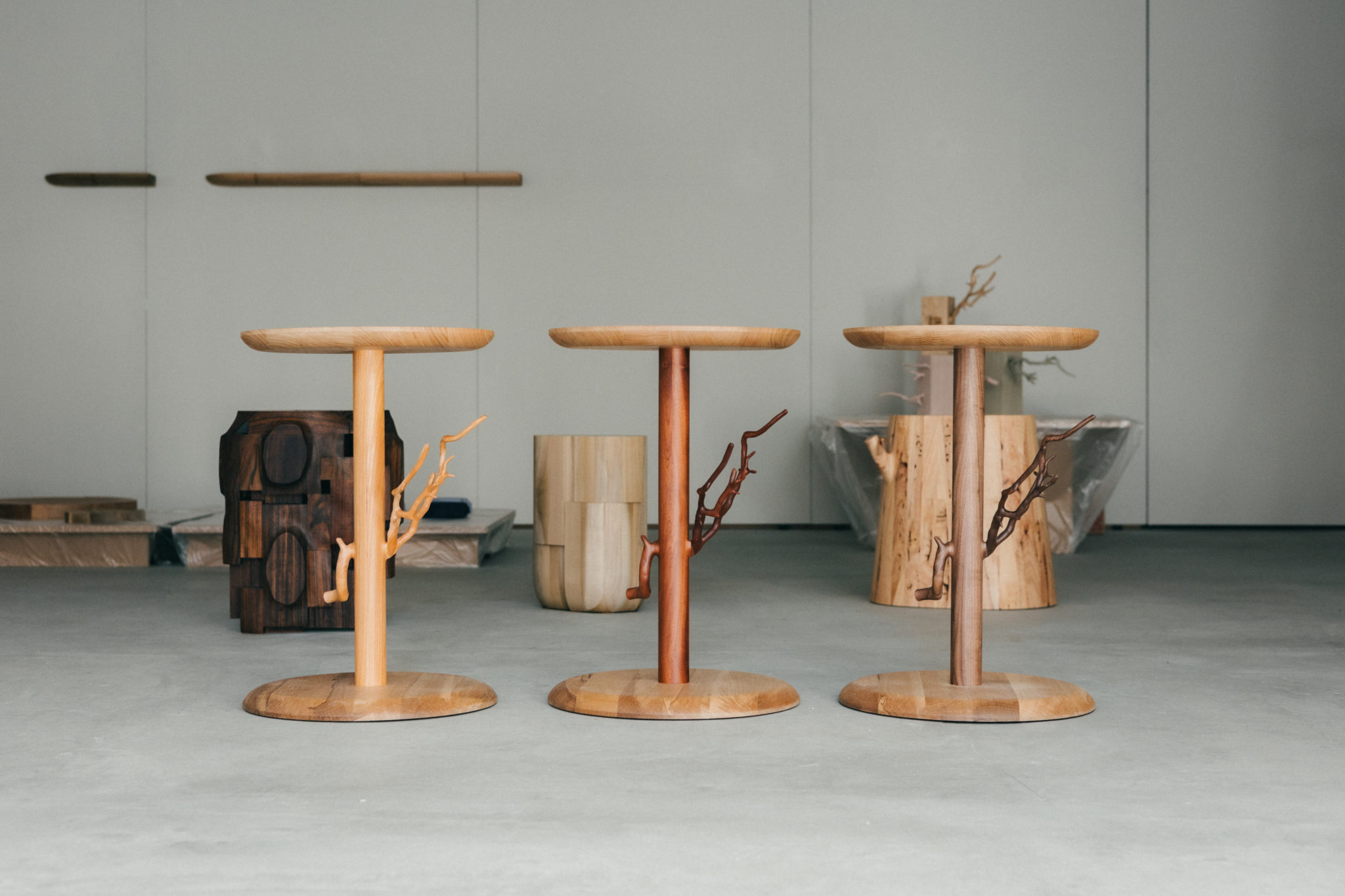 Photo : Saiko Kodaka
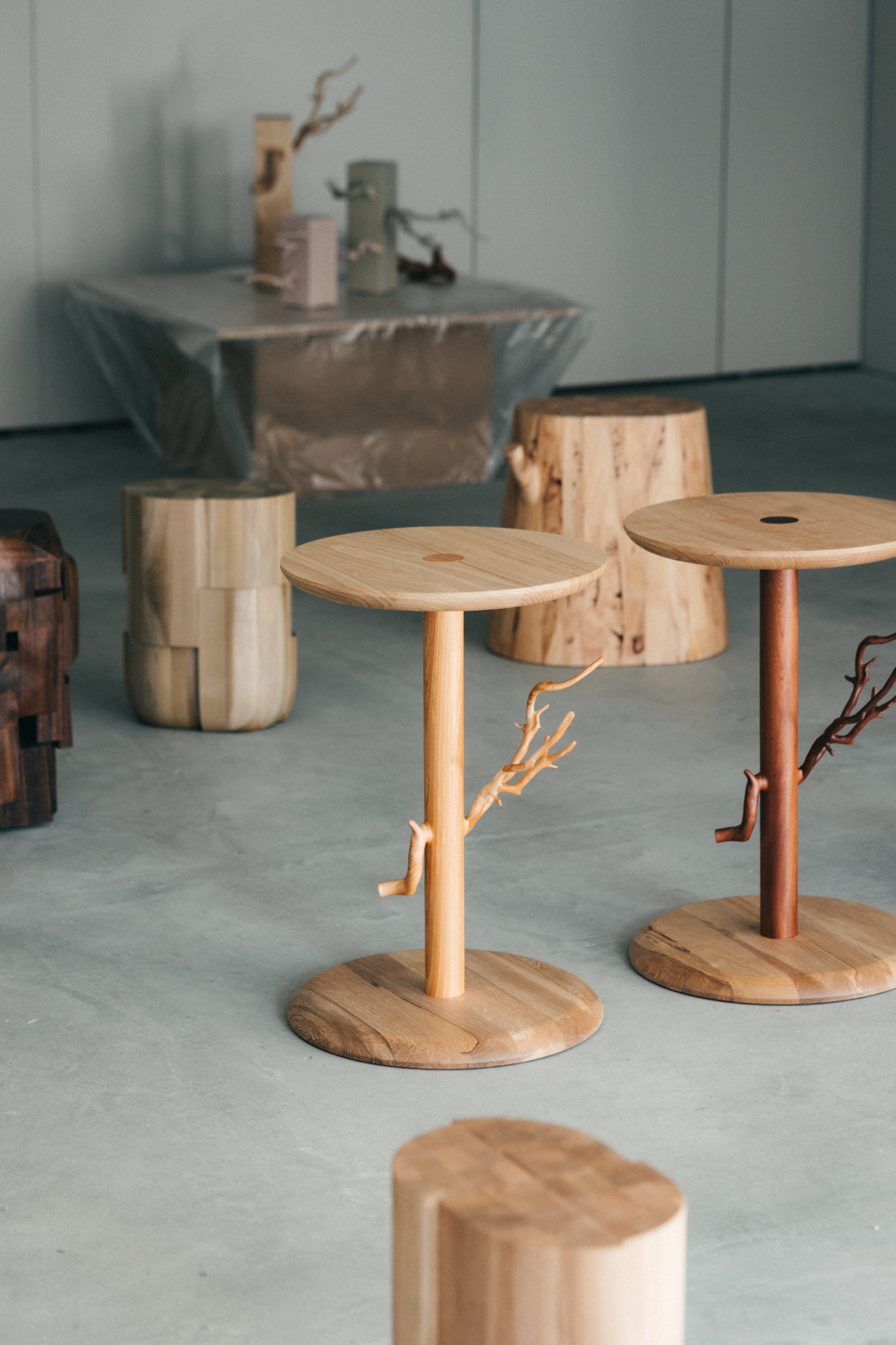 Photo : Saiko Kodaka
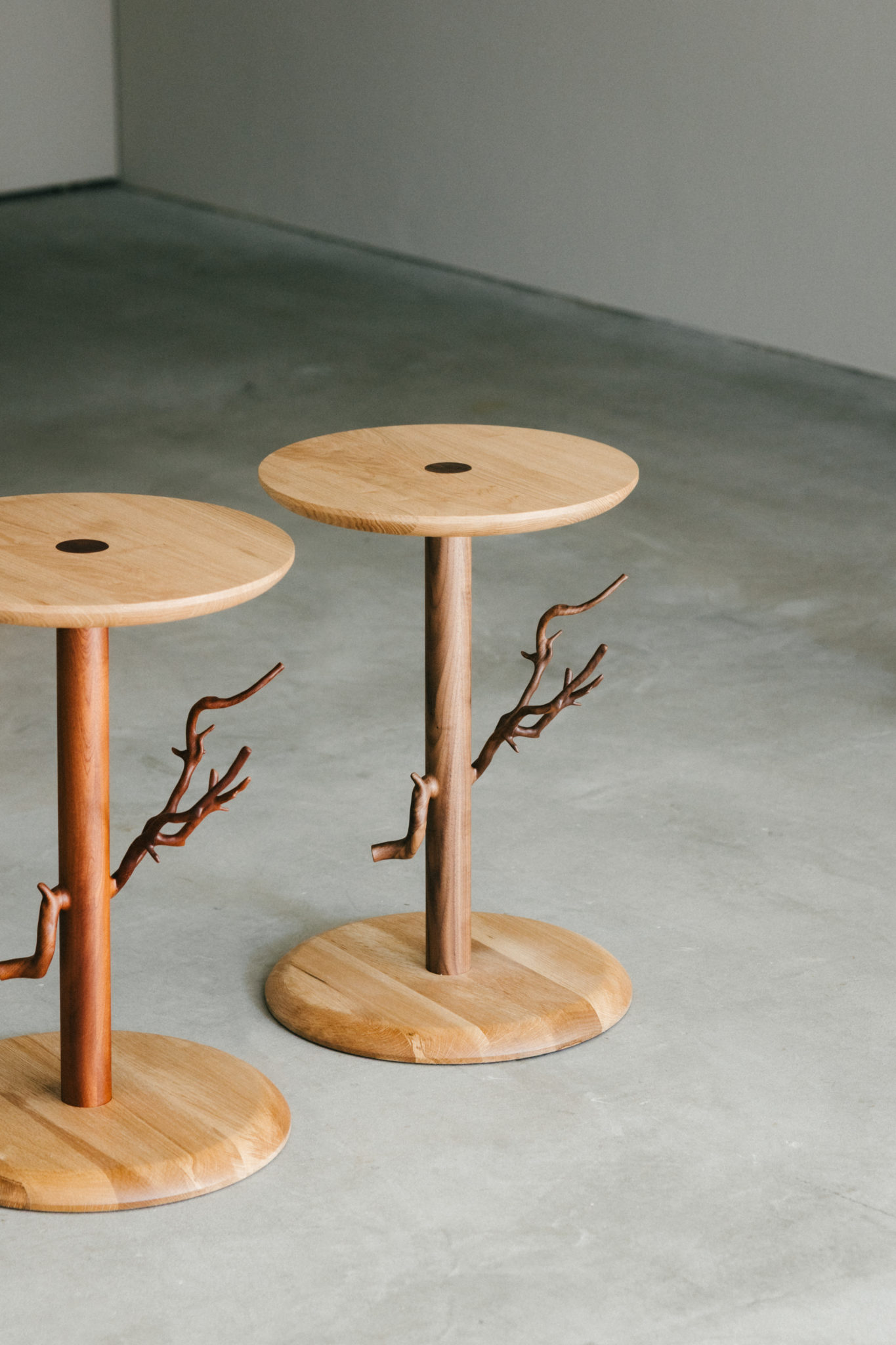 Photo : Saiko Kodaka
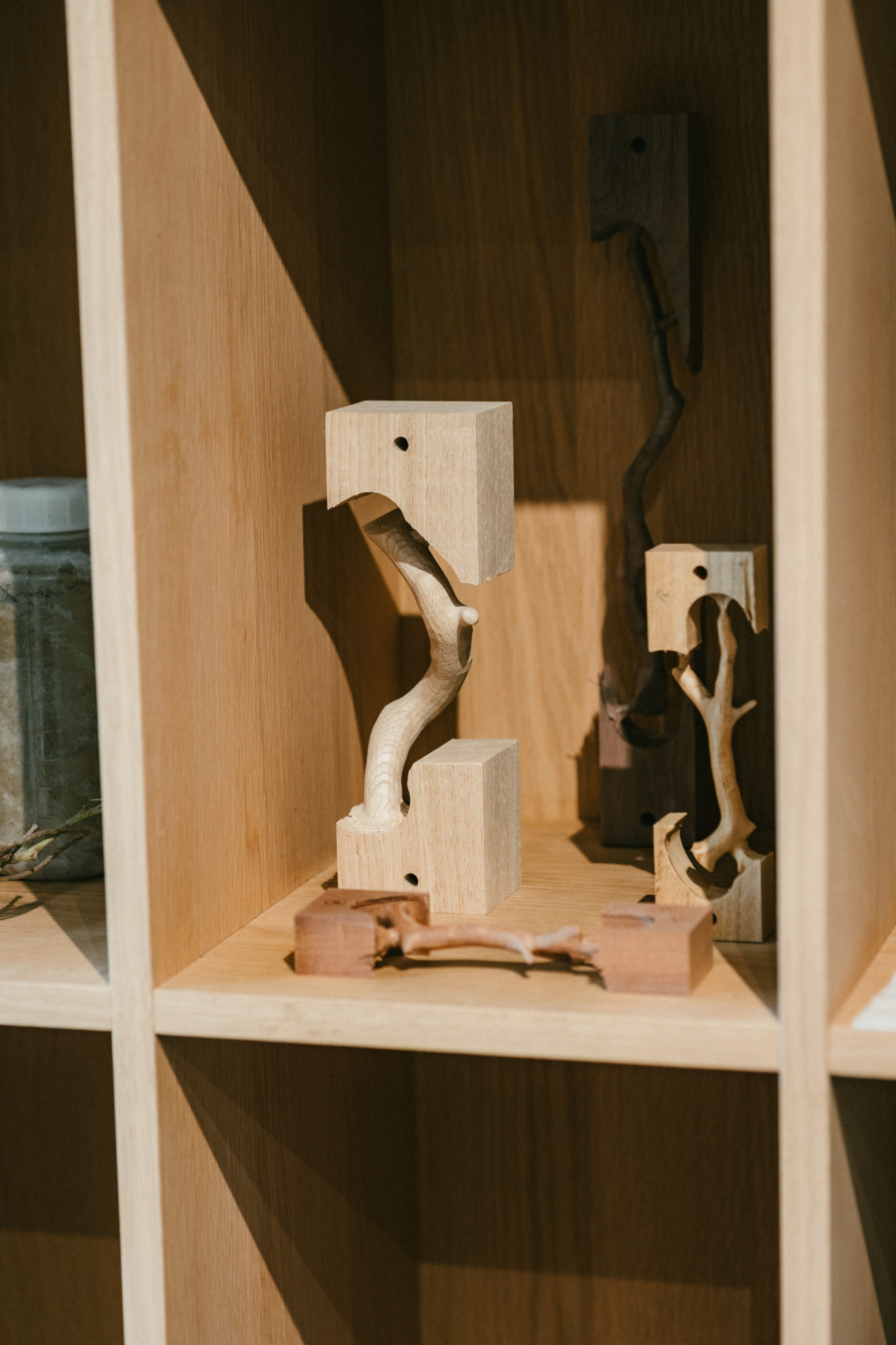 Photo : Saiko Kodaka
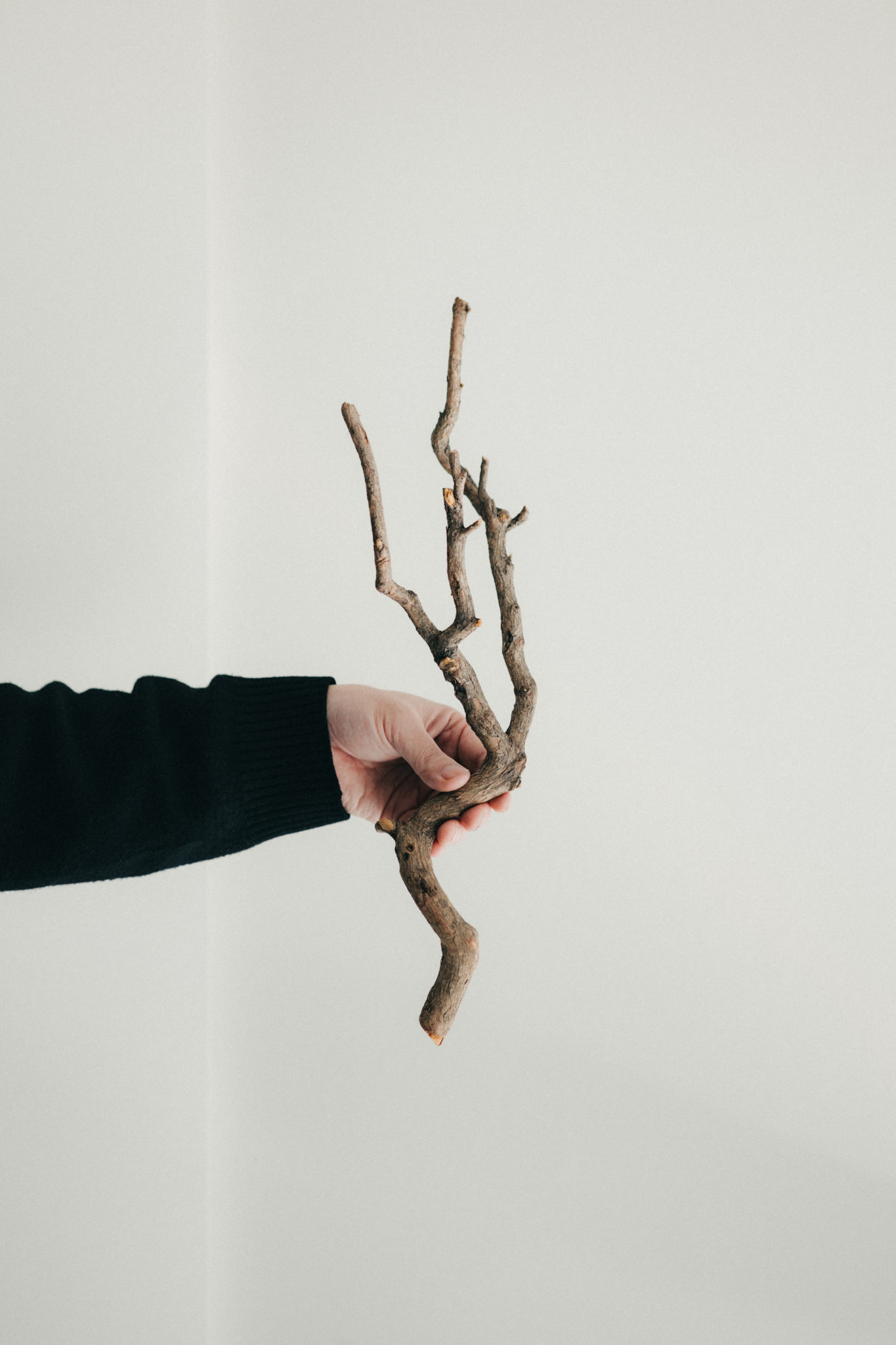 Photo : Saiko Kodaka
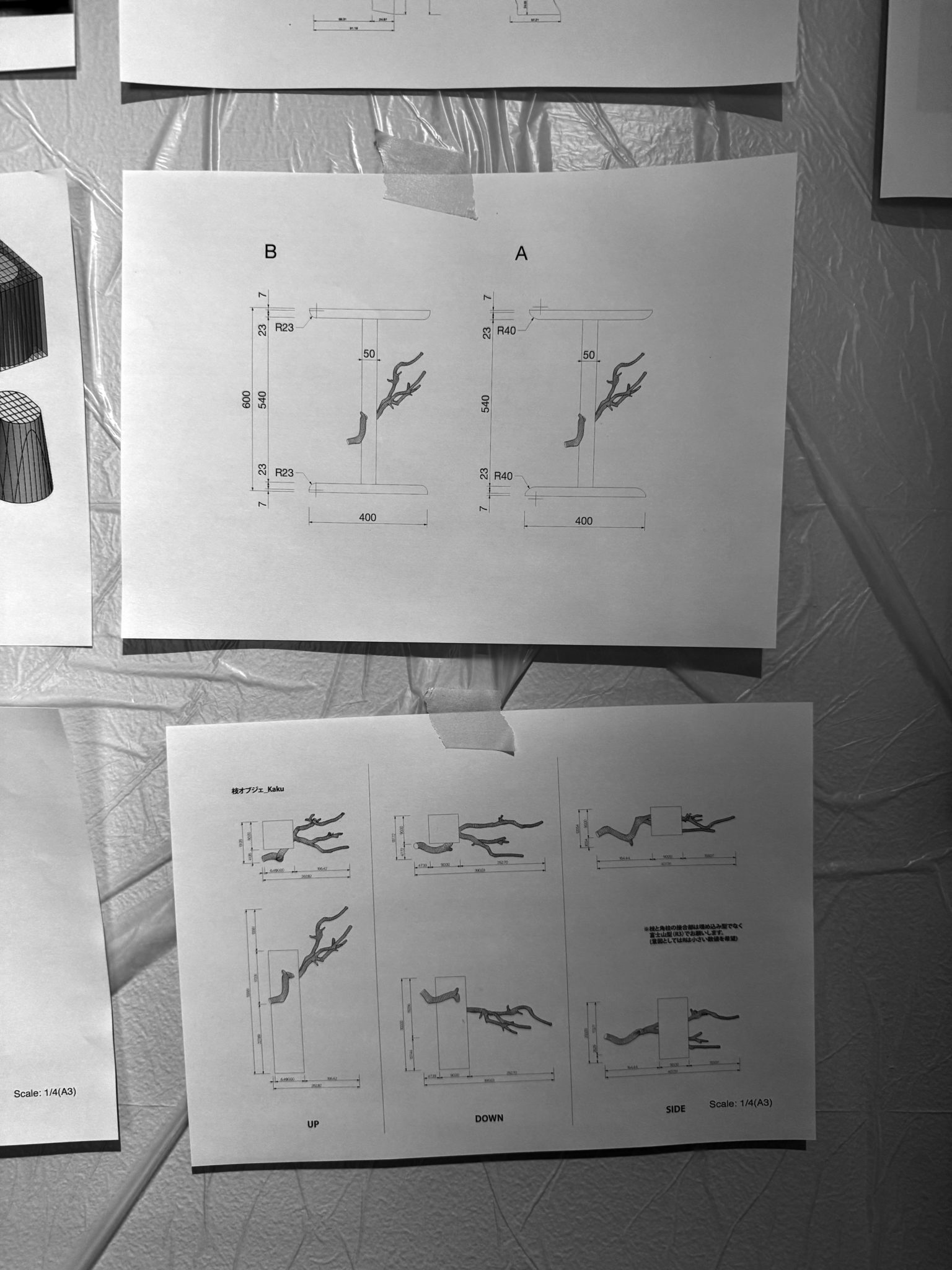 Photo : NOU Inc.
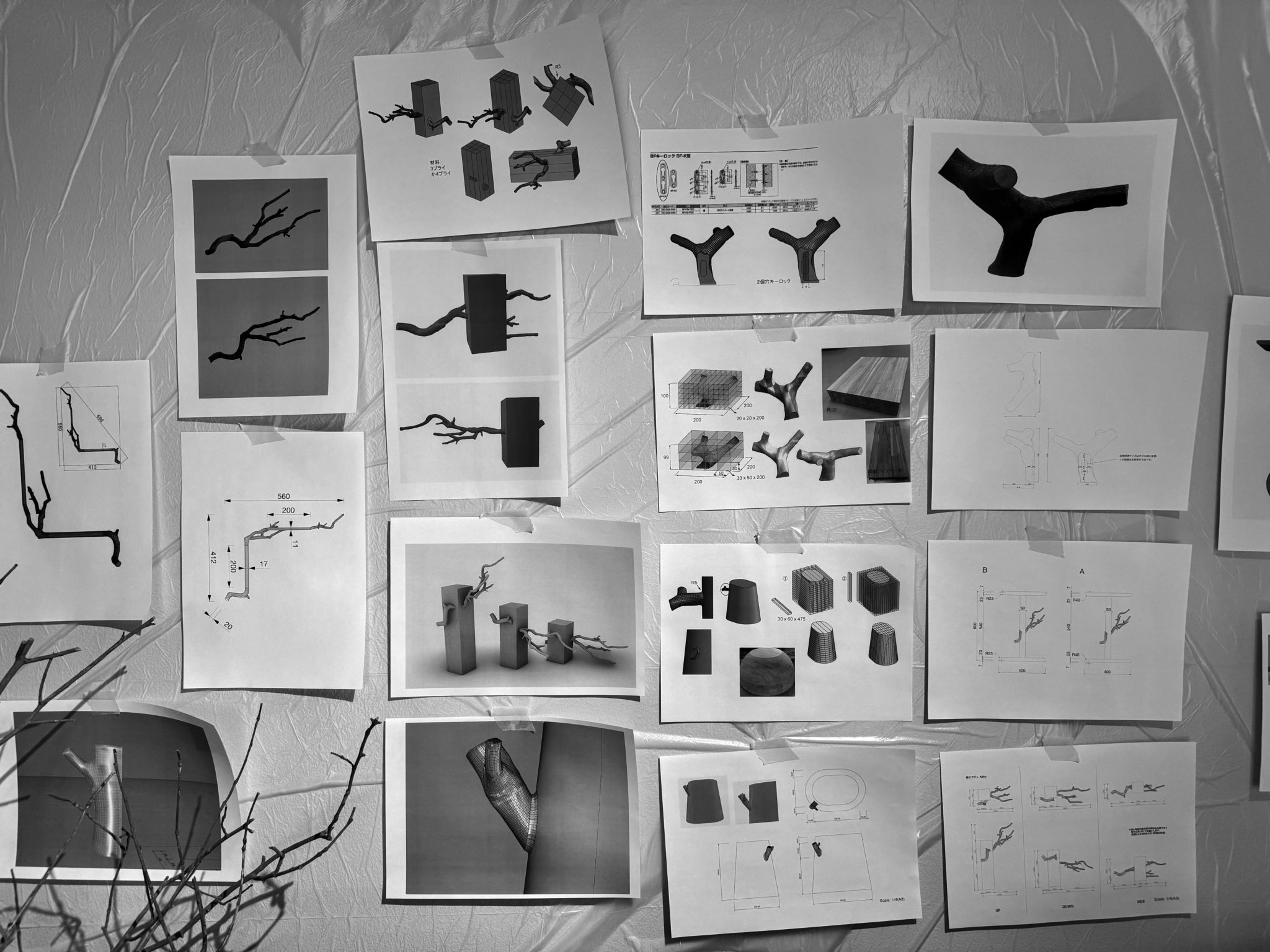 Photo : NOU Inc.
Industrial Branch|Intersection Table
The organically layered lines of a branch were 3D scanned and applied directly, in their original form, to the table’s support structure. It functions both as a table and as an object. The supports are crafted from Japanese zelkova, walnut, and sapele, each presented in its natural wood color. For the tabletop, chestnut—lightweight yet strong—was selected, while the base is made of oak, chosen for its weight and hardness. Through these material choices, the functional performance of the product has been carefully considered and refined.
-Industrial Branch-
In the process of creating the original material ForestBank, I have collected branches from various places. Before they can be used as material, the branches must first be cut into small pieces. Over time, I have processed countless branches, and among them there were some whose unusual forms or distinctive textures caught my attention. Instead of using these branches as material for ForestBank, I quietly set them aside and collected them without any particular purpose.
At first glance, they are nothing more than ordinary branches with no apparent value. Yet they hold the potential to become fragments of ideas or the starting point of new creations. For me, they possess a kind of value that cannot easily be explained. It is similar to the feeling of picking up a small stone or shell by the sea or along a riverbank—something people instinctively take home without any clear reason.
In this project, I wondered whether these branches, which had remained without a purpose, could be given a function and elevated into product design. Each branch is 3D-scanned and converted into modeling data. With the support of Karimoku Furniture, the form of the branch is then carved from wood using a CNC machine. In this process, the natural object is first translated into data and then re-emerges as material. What occurs here is a back-and-forth movement between data and matter.
Using the manufacturing technologies that Karimoku employs to mass-produce furniture, the project attempts to mass-produce “branches.” In doing so, it unsettles the boundary between original and reproduction. Moving between craft and industry, a natural branch is transformed into an industrial product. It is a paradox: creating a “branch” from “wood.” Through this inversion, the project quietly reverses the relationship between nature and industry.
--
Design: Yuma Kano
Manufacturer: Karimoku Furniture Inc.
Dimensions : H600 x Φ400mm
Materials : Japanese zelkova, Walnut, Sapele
Photo: Saiko Kodaka